
Writing the Aftermath
How poems respond to large events without repeating the headlines

#Field Notes
There are moments when the world speaks in a chorus, when voices gather in the streets, when signs are lifted, when bodies move together in response to something that can no longer be held privately. We recognize these moments immediately: they feel charged, public, and urgent. They ask to be witnessed.
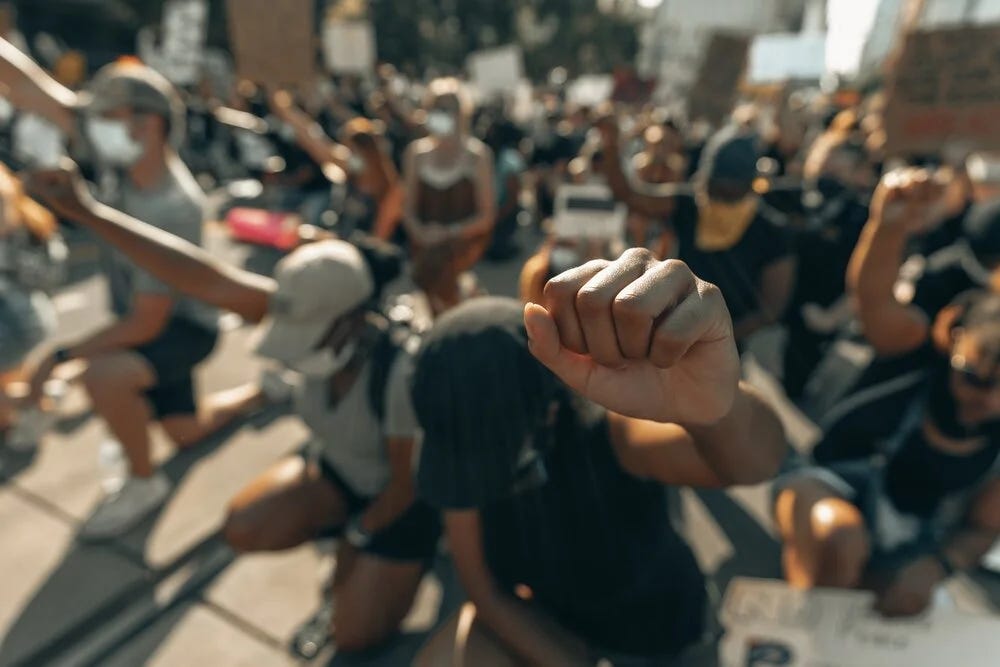
And yet, even in the middle of such collective expression, there is something quieter happening beneath the surface. Each person in the crowd carries their own reason for being there — a grief, a fear, a hope, a memory. The visible action is only one layer of the story.
Poetry often turns toward that quieter layer.
When events grow large, when they spill into headlines and images that move too fast for us to absorb, poems rarely try to compete with the noise. Instead, they look for what remains in the wake of it all: the sign left leaning against a wall, the ache in a wrist after holding it aloft, the moment of stillness when the crowd disperses and the street goes quiet again.
These images ask us to think about that tension: between the public moment and the private residue it leaves behind. They show us action, but they also invite us to imagine what happens just after — when the lights change, when the chant fades, when people go home carrying whatever the day has stirred inside them.
This week’s Frame & Phrase is an invitation to write from that space of aftermath. Not to retell the event itself, but to notice what lingers. The single object. The small gesture. The human trace that holds the emotional truth of what occurred long after the crowd has moved on.
From a craft perspective, this kind of writing asks us to practice attention and restraint, to trust that a quiet detail can carry more meaning than a loud declaration. In doing so, we allow the poem to open a deeper, more intimate way into the moment.
Inside this Frame & Phrase Post
A Lesson on Writing the Aftermath
#Bookshelf of Recommended Books
#Field Guide to Claudia Rankine’s Citizen
#Frame & Phrase Multi-layered Prompt with Image
