
What Winter Teaches
How to enter the quiet season

#Field Notes
I kept finding myself looking up. The snow had outlined every branch, every small decision the tree had made over years of wind and weather. What I usually pass without noticing became visible, not because the tree changed, but because winter showed me its bones.
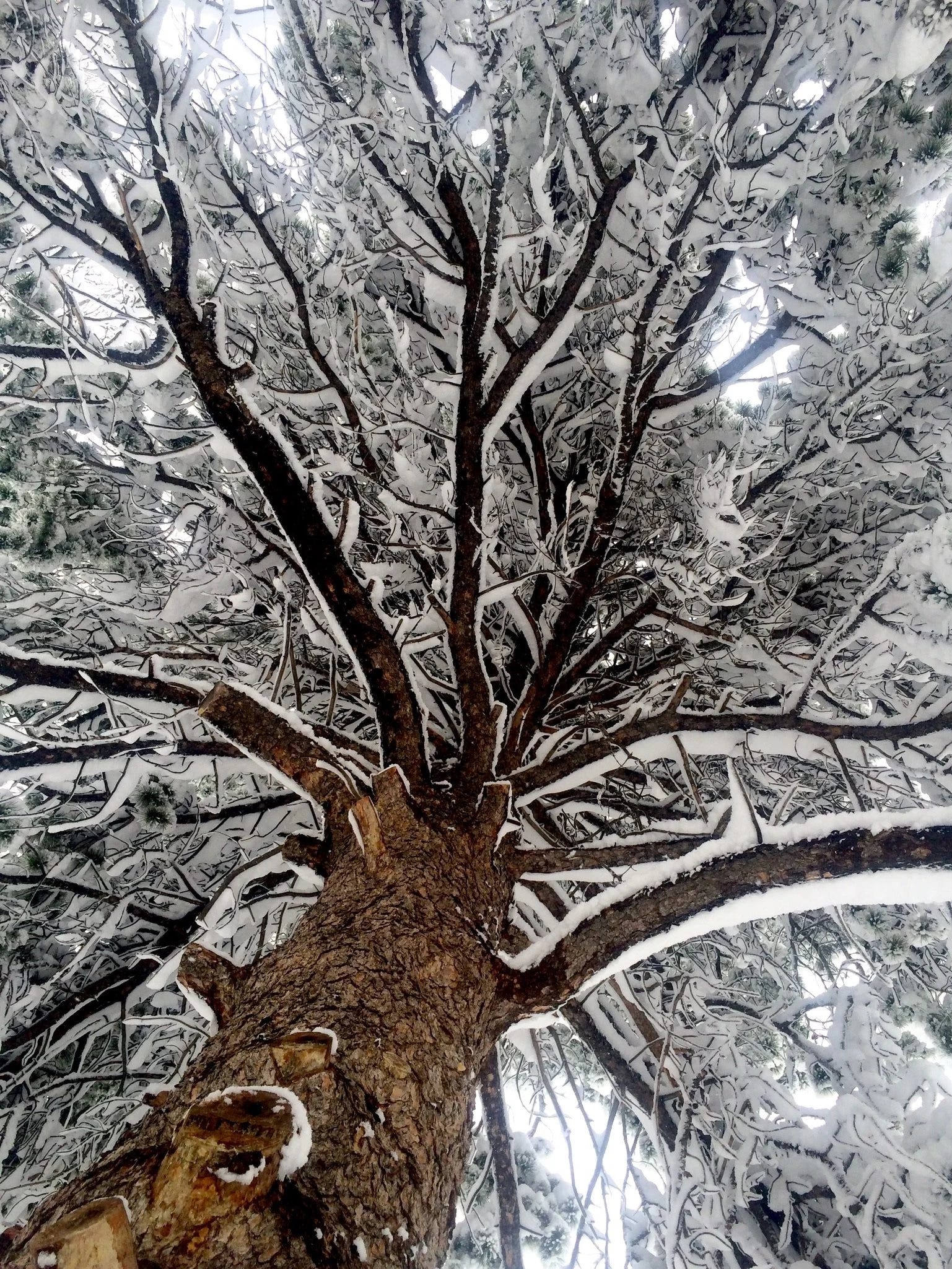
Standing there, it didn’t feel like stillness was a lack of movement. It felt like permission, a slowing that let me inhabit one place long enough to see pattern, weight, and grace. The world grew quieter, and the quiet gave shape to things I’d forgotten to notice.
I thought: this is what happens when we stop rushing toward the next thing. The tree wasn’t asking me to interpret anything. It was simply holding its form. I was the one learning how to see.
I began to think about the writers who remind us that attention itself is a practice. Mary Oliver tells us that “to pay attention, this is our endless and proper work,” and winter, with its restraint and stripped-down beauty, sometimes makes that work easier. Jane Hirshfield writes often of what remains when we remove excess, how clarity lives inside what’s been pared away. And Louise Glück, in her winter poems, refuses sentimentality and lets the season speak plainly — the honesty of cold, the starkness that can also feel like truth.
Each of them, in their own way, shows us something essential about craft: noticing is generative. We don’t have to decorate the moment. We can let the world do the revealing. In poems, this might mean allowing images to carry meaning instead of explaining; trusting the architecture instead of covering it; using white space (like snow) to show what’s already there. Revision becomes less about adding and more about uncovering.
As I think about writing in this season, I keep returning to that image of the tree — rooted, patient, traced with light. Sometimes the poem isn’t found by moving faster. Sometimes it appears when we stand still long enough for its outline to show.
Inside this Frame & Phrase post
A Gentle Lesson on Revision
#Bookshelf of Recommended Books
#Field Guide to Mary Oliver’s American Primitive
Frame & Phrase Multi-layered Prompt with Image
