

#Pen & Page: The Space Between
A prompt about absence, silence, and the stories that begin where certainty ends
Every photograph tells us what is present. Poems often begin with what is missing.
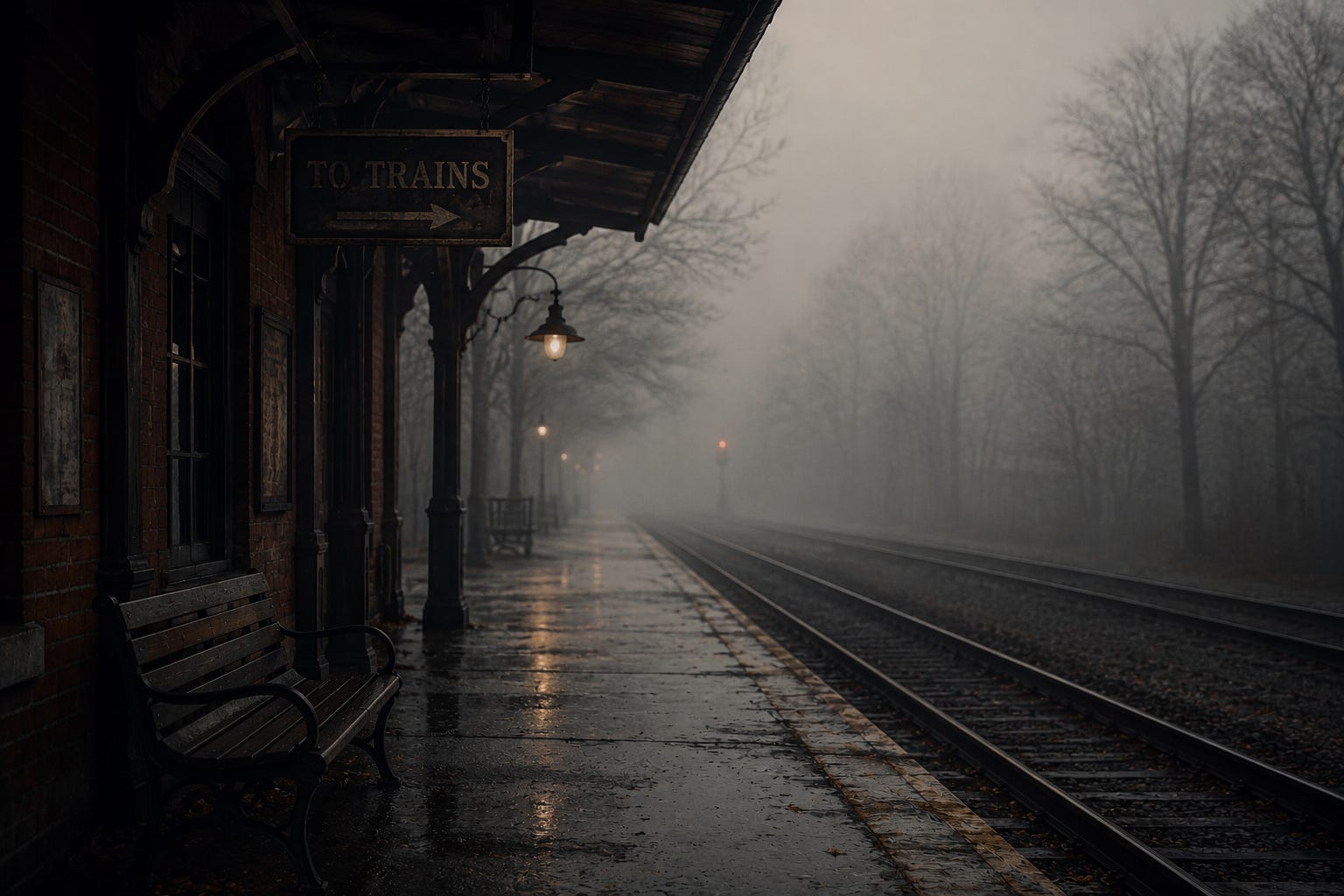
A photograph records what stood before the lens.
Poetry reaches toward what remained outside the frame.
The train that had already left.
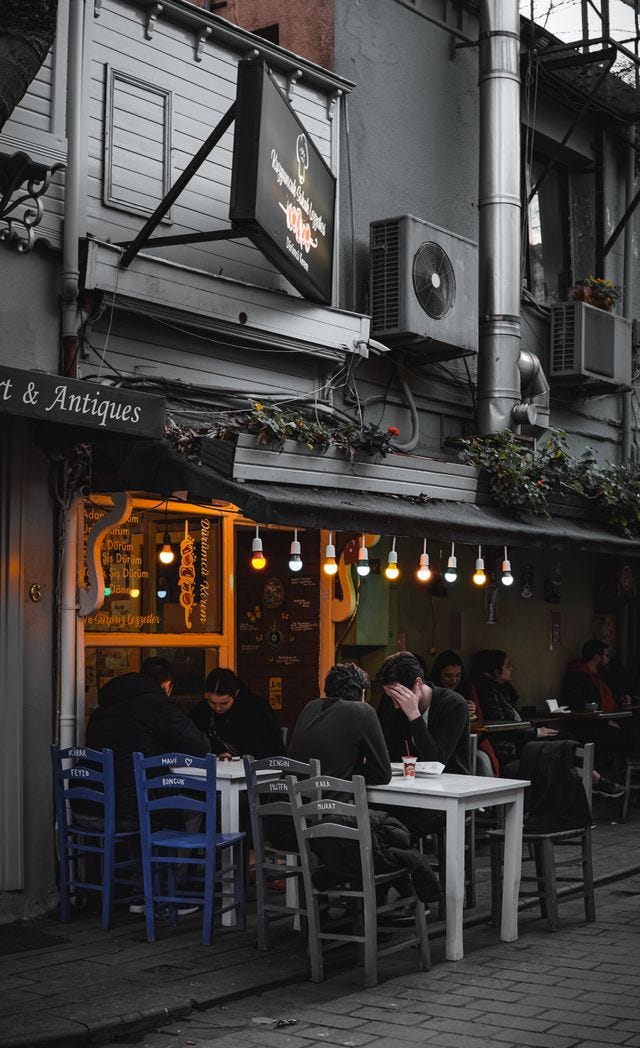
The conversation still echoing after the cups were cleared.
The question no one asked.
The hope someone carried home.
The life just beyond what we can see.
Sometimes the truest poem begins there.
Take a quiet minute with this image before reading on. Let your attention settle. You don't need to understand it. Simply notice what draws you—and what remains just beyond your reach.
Why These Prompts Return to Similar Ground
If you’ve been writing with me for a while, you may notice that certain ideas return.
Attention.
Transformation.
Silence.
Wonder.
Absence.
This isn’t repetition so much as revisiting.
Like poets, we often return to the same landscape, seeing something new each time.
Each prompt invites us to practice a slightly different way of looking—because writing begins long before words arrive on the page.
This is about ways of paying attention.
These prompts are less about finding a poem than about cultivating the habits of mind from which poems naturally grow.
#Core Prompt: What is Withheld
Premise
A photograph can only show us what stood before the lens. A poem can move beyond it. As you study today’s image, notice what first draws your attention. Then, gently set that observation aside.
Instead, write toward what the photograph cannot reveal.
Perhaps it’s the conversation that changes someone’s life. The news that has not yet been spoken. The memory one person carries while another laughs. The decision made on the walk home. The silence between two people who no longer know how to speak. Or perhaps what remains unseen is something quieter still—a hope, a fear, a longing, an unanswered question.
Allow the visible world to become a doorway rather than a destination.
Trust what remains beyond the frame.
Prompt
Spend a few quiet moments with the photograph before you begin writing.
Rather than describing what you see, enter the space just beyond the frame. Write toward what cannot be photographed.
Perhaps it is a memory carried by one of the people. A conversation that changed everything. An absence that shaped the moment. A hope, a fear, or a decision that remains invisible to everyone except the person who carries it.
Allow the visible world to become a doorway into the unseen.
Don’t worry about explaining the photograph. Let it become the place where your poem begins—not where it ends.
Craft Menu
Choose one invitation, or let it lead you somewhere entirely unexpected.
Begin with an object in the photograph, then gradually reveal what it cannot know.
Write from the perspective of someone just outside the frame.
Let the poem revolve around an unanswered question rather than an answer.
Write a poem in which the most important event never appears on the page.
Allow silence, gesture, or a single physical detail to carry the emotional weight.
Begin in observation and end in revelation.
Companion Poem
Mark Doty — “A Display of Mackerel”
Notice how the poem begins with careful observation but gradually opens into something much larger than the fish themselves. Doty allows the visible world to become a doorway into reflection, meaning, and human experience.
As you read, ask yourself: Where does the poem quietly move beyond description?
After You’ve Written
Before revising, ask yourself:
What remains just outside the poem’s frame?
Have I trusted the reader to discover what isn’t directly stated?
Where does the poem move beyond observation into insight?
Is there one place where I can remove explanation and allow the image—or the silence—to do more of the work?
Reflection
As poets, we spend much of our time looking closely. But what if this practice extends beyond writing?
How often do we move through our days noticing only what is immediately visible? What conversations, histories, longings, or quiet acts of courage remain hidden beneath ordinary moments?
This week, pay attention to what cannot be seen at first glance.
You may discover that poetry begins long before you reach the page.
Carry this way of seeing into the week ahead. Sometimes what we notice beyond the frame quietly changes what we find within ourselves.
Write and thrive,
Robbin
www.robbinfarr.com
10poetrynotebooks@gmail.com
Do you have a manuscript in progress?
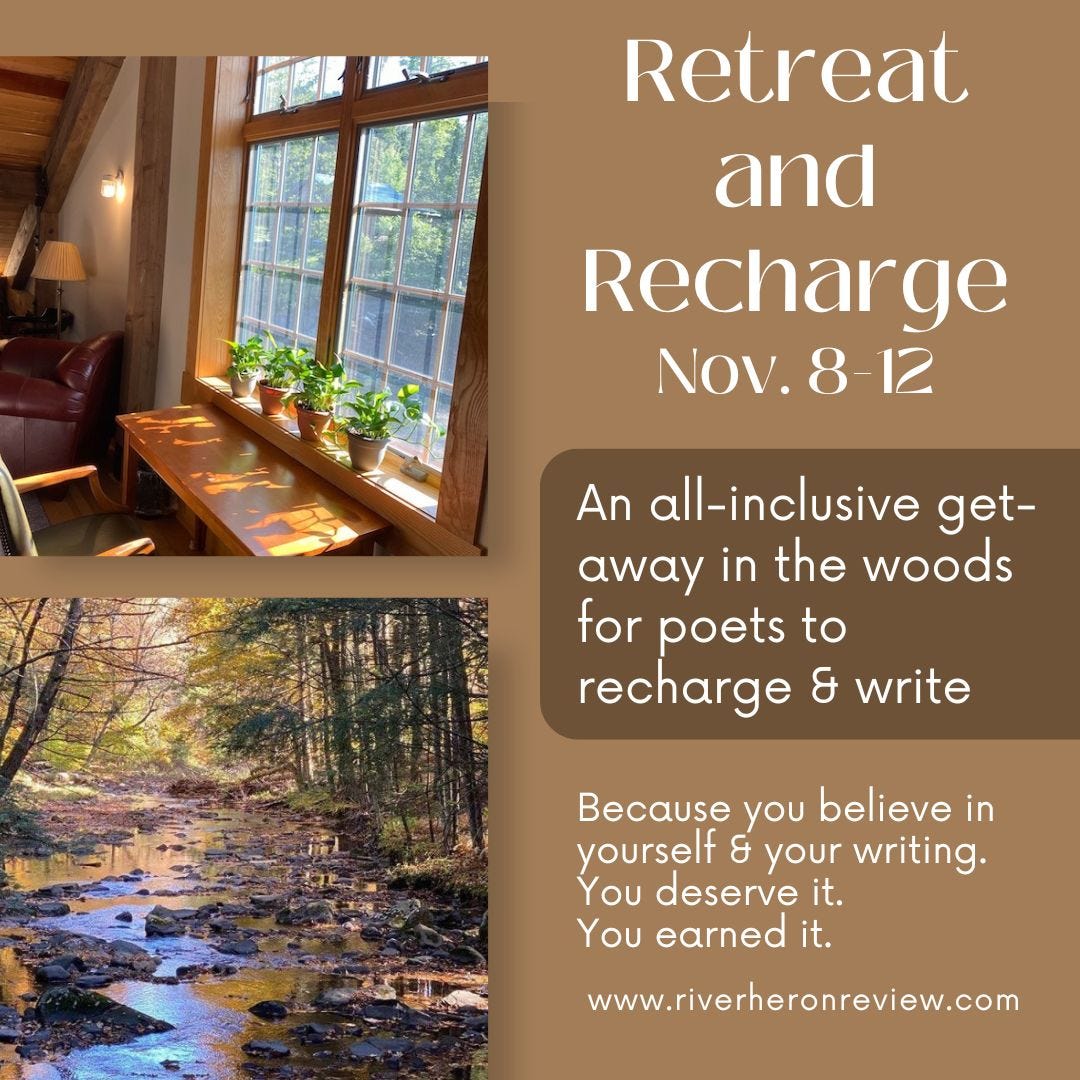
One of the most exciting additions to this year’s RECHARGE: A Poet’s Retreat is the opportunity to receive a one-on-one manuscript review.
Before the retreat, you’ll have the option to submit a manuscript for a thoughtful editorial review. During our time at the retreat, we’ll discuss not only individual poems but also the manuscript as a whole—its organization, pacing, recurring images, emotional arc, and readiness for publication.
If you’ve been considering a chapbook or full-length collection, or simply wondering what your poems are saying together, this conversation can offer fresh perspective and practical next steps.
Combined with inspiring workshops, generous writing time, woodland trails, farm-to-table meals, and the companionship of fellow poets, RECHARGE offers space to step away from everyday demands and return to your poems with renewed clarity, purpose, and joy.
We have just two openings remaining, and we’d love to welcome you this November.
