

Pen & Page: An Invitation to Notice What Has Been Gathered
A prompt about the quiet act of gathering what the day offers.
Observation is one of the quiet foundations of a writing life. Through careful noticing, the world reveals not only what is visible but also what is felt and remembered. A particular color, the angle of light across a table, the way someone carries a small object—these moments hold more than their surface. When we pause long enough to observe them fully, they begin to reflect the textures of our own lives: what we have known, what we carry, and what we recognize in passing. In this way, observation becomes a meeting place between the outer world and the inner one.
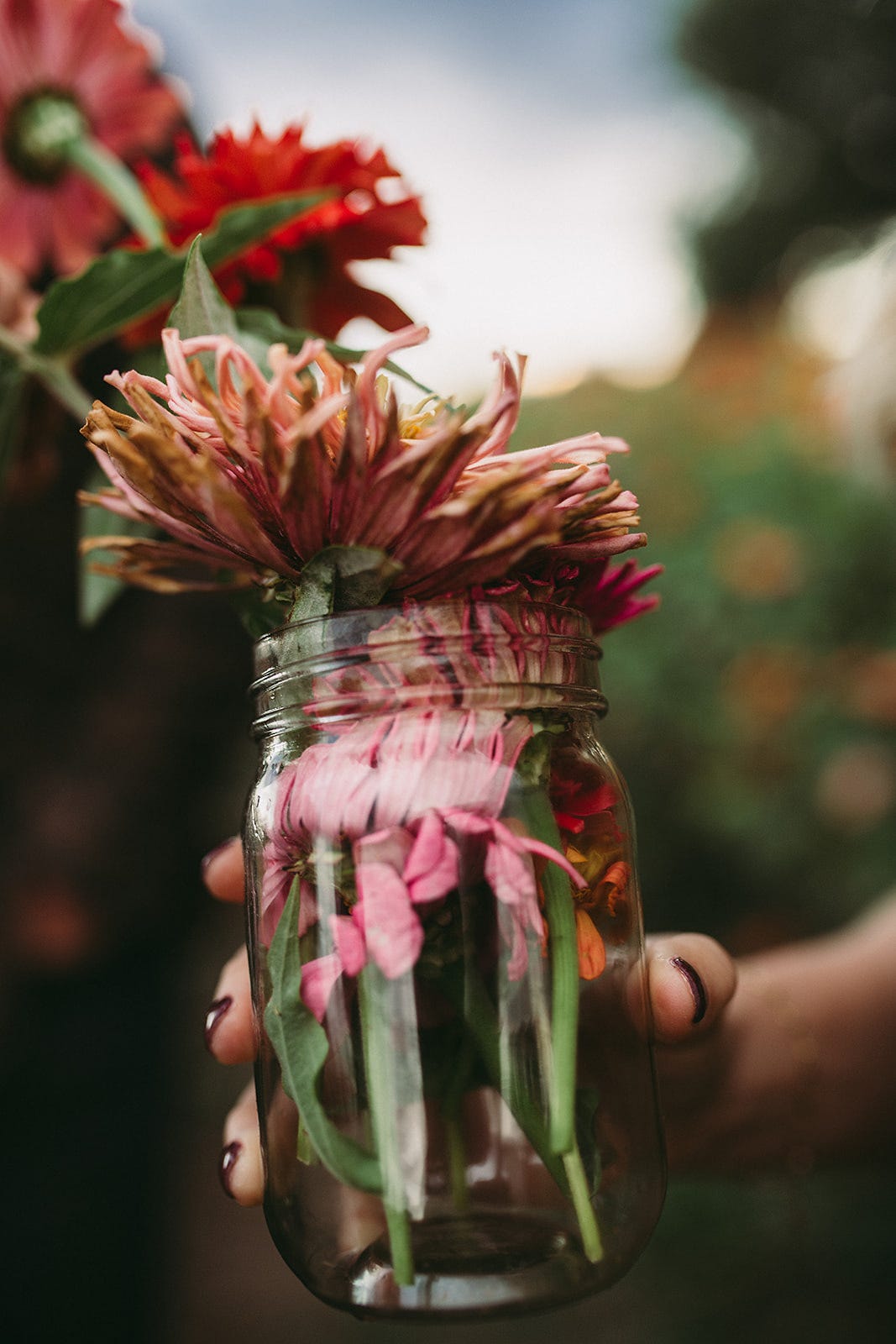
Prompt #22: What is Captured in the Mind and Released in Poetry
Premise
Some images simply catch the eye. Others carry a quiet resonance — something that lingers a moment longer in the mind. In poetry, such images invite us to pause and notice what might otherwise pass quickly: a handful of flowers gathered along the road, the weight of a glass jar in a hand, the brief brightness of color against the day. When we begin with images like these, the poem often discovers its way forward through attention rather than explanation.
Prompt
Take a close look at the image above and begin with one clear observation—a color, a texture, a gesture, or the way light falls across what you see.
Stay with the physical details for a moment. Notice the shapes, the weight of things, the small arrangements that might otherwise pass quickly.
Then allow the observation to open slightly outward. Sometimes what we notice in the world reflects something we already carry—an echo of memory, a passing thought, a feeling that arrives unexpectedly.
Let the poem move gently between what is seen and what is felt.
For a fuller exploration, allow the poem to move from observation → reflection → return to the image. End by bringing the poem back to what is physically present.
Craft Menu (Choose one approach)
• Stay Close to the Senses — Let the poem remain rooted in what you can see, touch, or smell. Notice how small details begin to accumulate meaning.
• Observation to Memory — Begin with what is visible in the image, then allow the poem to drift briefly toward a memory or feeling that the observation awakens.
• The Moment Held Still — Write the poem as if time has slowed for a few seconds. Let the poem linger inside that single moment of attention.
• The Gathered Object — Imagine where these flowers were found or gathered. What path led them here?
Share Back
You are always welcome to share a few lines in the comments. It’s a pleasure to see what begins in your notebooks.
Reflection
A poem sometimes begins simply by noticing what is already in front of us. Often the smallest details, what catches our eye for just a moment, carry more meaning than we first realize.
#NaPoMo
If writing from images and moments of attention speaks to you, River Heron Review will be sharing a daily image + prompt throughout April for National Poetry Month.
To receive the daily prompt, register by clicking the button below. You will find your prompt each morning at 7:00 AM in your inbox starting April 1.
I hope a small bright thing finds its way into your notebook this week.
Write and thrive,
Robbin
10poetrynotebooks@gmail.com
www.robbinfarr.com
**Mason Jar Zinnias**
The first thing is the nails...
short, painted almost black,
a small deliberate night
against the sudden riot of pink
and burning coral petals
jammed into the glass.
The jar is crowded, shamelessly full:
stems crushed shoulder to shoulder,
leaves pressed flat to the curve
like lungs that forgot how to exhale.
Light slides in from the side
and gilds the outermost fringe
so each bloom looks briefly lit from within,
a borrowed fire.
The grip is careful, not clenched,
just curved,
the way you hold something
you are afraid will spill
or already has.
The weight sits cool and solid
in the palm,
petals brushing the base of the thumb
like small insistent reminders.
Somewhere behind the color
a quieter room waits,
a table set for fewer chairs,
a stone still warm from yesterday’s sun,
the kind of silence
that makes even vivid things
feel borrowed.
Still the zinnias insist.
They were gathered somewhere -
ditch bank, garden edge, impulse mile-marker -
chosen one by one
because red is louder than grief,
because pink remembers laughter
even when the throat is tight.
Now the hand cradles the offering.
The glass is streaked with green water,
a faint mineral scent rises,
petals already softening at the edges.
Whatever door this is carried toward,
whatever quiet it must walk into,
the color has already arrived first -
bright, brief, unapologetic -
and refuses, for this moment,
to let the day stay gray.
Contact him on trading
https://t.me/TylerForexSignalss