
Pen & Page Prompt #17
This Week: Writing From the Quiet Aftermath — Letting an Object Tell the Story

Pen & Page: What Remains After the Storm
A prompt about what endures — objects, memories, habits, relationships — after something has shifted.
Sometimes the drama feels like the whole story — the argument, the storm, the upheaval, the moment everything tilts. But when I look back, what often lingers in my memory isn’t the event itself. It’s what was left afterward: a small object, a habit that changed, a quiet mark on the world. This week’s prompt invites us to write from that quieter place — to see what remains, and what it has to say.
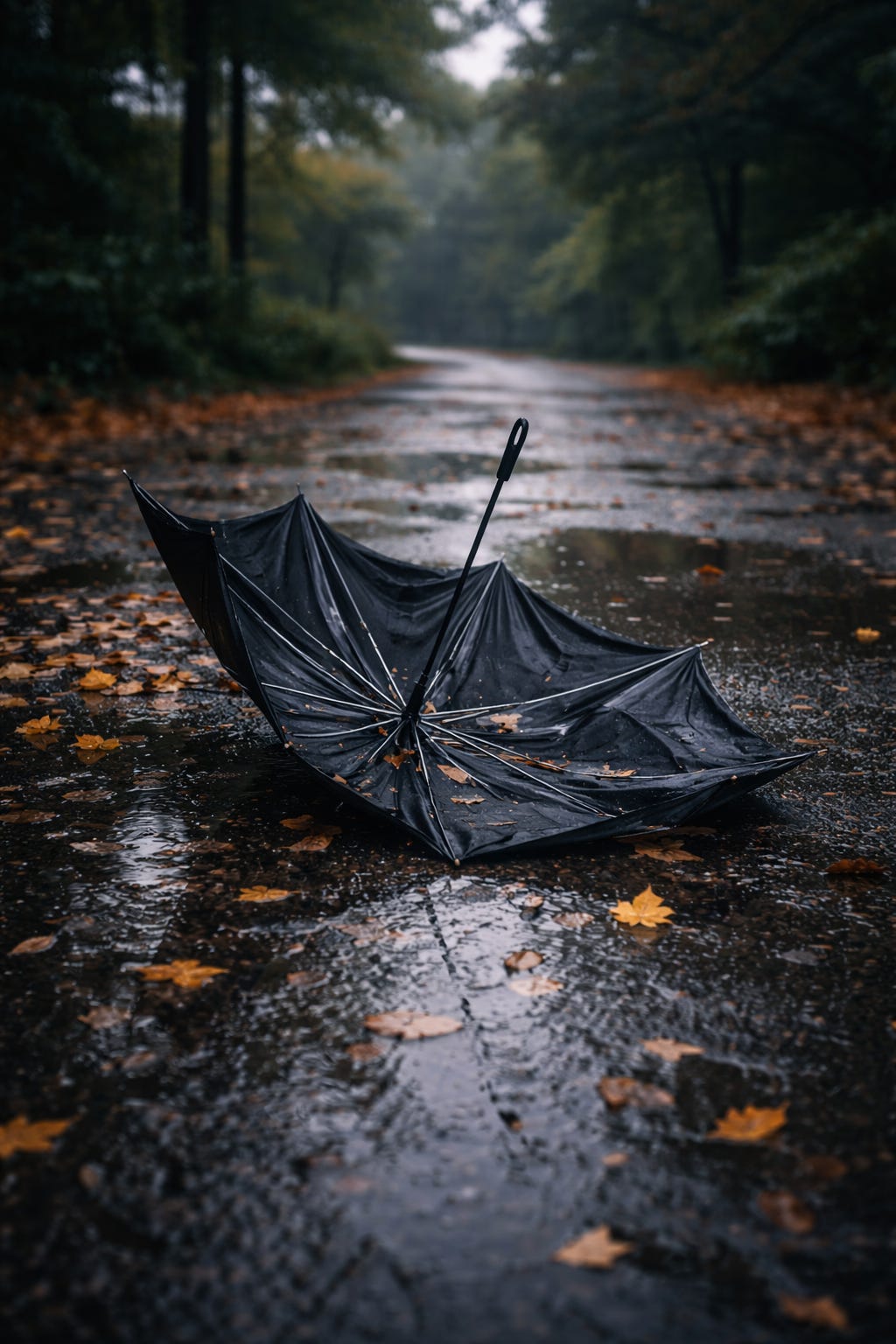
Prompt #17: When the Noise is Gone
Premise
We usually write about the storm itself — the drama, the noise, the fear, the rush of it. But often, the deeper poem lives in the quiet afterward. What is left on the table? What object feels suddenly more meaningful? What small, ordinary thing carries the story? This prompt invites you to look not at the crisis but at the residue of it.
Set-up
Choose a “storm” (literal or not):
a family argument
a move or downsizing
an illness
the ending of a friendship
an actual storm, flood, blizzard
a personal shift you can’t quite name
Then, instead of narrating the event, focus on one thing that remained afterward.
This might be:
a cracked mug
a dent in the doorframe
a voicemail
the indentation on a pillow
a quiet routine you didn’t expect to miss
Let that object or moment tell the story.
Core Prompt
Write a poem centered on one remnant — something that stayed after change arrived.
Avoid explaining the “storm.” Let the reader feel it through what remains.
Ask yourself as you write:
What does this object know?
What is it refusing to say?
What truth does it quietly reveal?
Craft Menu (choose 1–2)
Restraint: Don’t name the storm directly.
Specificity: Use 3 concrete, sensory details (texture, smell, weight, sound).
Silence: Leave one emotional moment implied rather than stated.
Repetition: Repeat one short phrase in different contexts to create echo.
Image thread: Return to the opening image at the end — altered, but recognizable.
Shape Options
Try one of these:
Short lyric: 12–16 lines, each line under 8–10 words.
Prose poem: One paragraph — no line breaks, but image-driven.
List poem: Each line begins with “What remained…” or “Afterward…”
Turbo Variations (for writers who want to stretch)
Write it from the perspective of the object.
Write two versions: one before you reveal anything and one where a single clue slips in.
End the poem with something beginning, not ending.
Share
Take the step and share the draft. What surprised you in writing it?
Optional Reflection
What do we learn about ourselves when we look at what’s left, and not only at what happened?
As always, write at your own pace and in your own way. Follow the image where it leads, and see what remains on the page when you’re done. And a little preview: next week’s paid Frame & Phrase will stay close to this theme, but with a wider lens. We’ll talk about current events, aftermath, and how poems can hold the quieter human story beneath the noise.
Write and thrive,
Robbin
Hi, so new to this.
Tattered blanket curls in gentle waves
unbroken, trembling toward release
still warm, still cradling
one so lately there
Sand castle definition ebbs
at tidal command
the green woolen blanket
is pulled away and
smoothed into practical folds
ready to embrace
another body and soul
anxious for its warmth
For a moment, it remembers
the twists and turns,
the midnight prayers
of one so lately there
First, the spiked air of clary sage,
then the slow melt into mint
and the sharp sweetness of star anise.
Soon a field of lavender rises,
and in its haze, cedars lift,
tall as your shadow.
The bottle warms in my palm.
Hours drift. Lavenders fade.
Now the air is dusted with tonka,
soft as memory turned to powder.
And I inhale nothing.
My breath is thick with absence.
Please, let me forget.
Let this scent carry away
whom I refuse to name.