
Pen & Page Prompt #15
This Week: In the Breath Between Day and Night

Pen & Page: Expanding and Contracting Time in the Poem
In poetry, time is never obligated to behave the way it does in the ordinary world. A poem can take a fraction of a second and stretch it until it holds an entire emotional landscape, or it can compress hours or years into a single gesture, a single image, a single breath. This ability to bend time, slow it down, open it up, tighten it, or collapse it, is one of the poet’s most powerful tools.
Temporal dilation occurs when a poet expands a moment beyond its chronological duration. A blink becomes a revelation; a pause becomes a threshold; the smallest sensory detail opens into metaphor, memory, association. The poem lingers, deepens, turns the moment until its facets catch different kinds of light. Nothing “happens,” yet the moment grows vast with interior movement. Time stretches because attention stretches.
Its opposite, temporal compression, works through concentration rather than expansion. Here, the poem gathers many moments into one: a lifetime inside a single sentence, a relationship distilled into the way someone closes a door, an entire season implied by the tilt of light on a windowsill. Compression gives the reader a sense of sudden revelation—how much can be carried in so little.
Both approaches rely on the same underlying principle: the poem’s relationship to time is elastic, governed not by clocks but by insight, emotion, and the poet’s willingness to follow where attention naturally intensifies. Poets use dilation when they want to let the reader dwell inside a moment that matters and they use compression when the meaning is best delivered in a swift, concentrated flash.
Learning to sense when a moment should open and when it should contract becomes part of our intuitive craft—an internal barometer for emotional weight. Some moments ask to be turned slowly in the hand, examined from multiple angles; others want to strike quickly and leave their echo behind.
This week’s prompt invites you to notice that instinct in action: to choose a single moment and explore how its meaning changes depending on whether you linger inside it or distill it to its essence. By shifting the tempo of time within the poem, you can reveal dimensions that might otherwise remain invisible.
Give it a try. Dare to change the tempo of the ticking second hand.
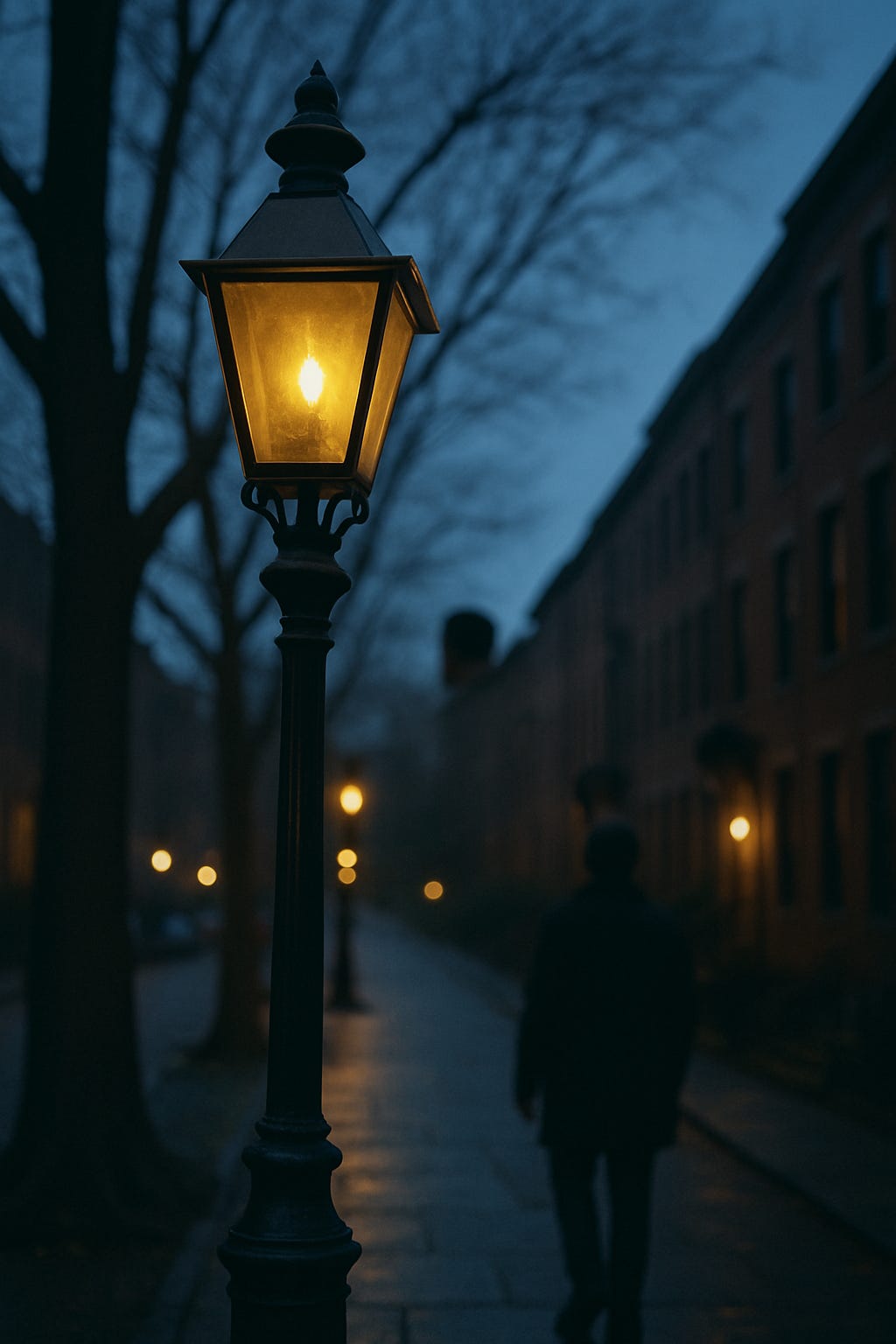
Prompt #15: The Last Light Before the Streetlamps Switch On
Setup
Poets often expand a fleeting moment by slowing the reader’s experience of it—letting the poem slip into an elastic sense of time. In life, a moment may pass without ceremony; in a poem, it can open into an interior world. You can stretch time by layering images, allowing metaphor or simile to deepen the scene, or letting memory and association braid themselves into the present.
The clock doesn’t have to move. The poem moves instead, outward, inward, or into unexpected directions, revealing emotional or psychological layers the moment itself only hints at. Temporal dilation gives the reader a way to inhabit the moment fully, with every sense awake and engaged.
Core Prompt
Write a poem set in the last light before the streetlamps switch on. Let the poem unfold in a suspended minute where day becomes evening but neither fully claims the scene. Something, emotional, physical, or atmospheric, should be on the verge of happening, but not yet realized. Stay in the threshold. Let the poem dwell in the hinge.
Craft Menu (Choose one or more)
Make use of shifting light: Let the changing light do narrative or emotional work. What becomes visible or invisible? What takes on new meaning in the dimming?
Lean into sensory transition: Notice how sound, temperature, color, or texture change as dusk settles. Let these shifts cue internal movement.
Use threshold logic: Allow the poem to hold two conditions at once—certainty and uncertainty, longing and restraint, the known and the almost-known.
Let stillness contain tension: Though nothing “big” may happen, use the pause to suggest a brewing conflict, realization, or turning point.
Employ selective clarity: Sharpen one detail and let others blur. This contrast can create emotional depth and cinematic tension.
Shape Options (Play with one of these)
A single unbroken stanza: Let it spill forward like light sliding into evening.
A poem in three short fragments: One for day, one for dusk, one for the moment before night claims the scene.
A braided poem: Interweave a memory that carries its own version of “almost-night.”
A portrait poem: Show a person or the self caught in that transitional light, altered by it.
Constraints & Twists (Choose one)
Include an object that changes meaning as the light fades: A window, a coin, a flower, the back of someone’s hand.
End the poem before the streetlamp turns on: Hold the moment open.
Use only images of motion: Wind, a passing car, a shifting silhouette, a bird crossing dusk.
Or: use only images of stillness: A held breath, a shadow pinned to pavement, the quiet of waiting.
Share Back
If you feel moved, share a line, a stanza, or your full poem in the comments. Tell us what changed as the light changed—or what stayed stubbornly the same.
Reflection
Where in your life do you feel caught at a threshold: between roles, seasons, desires, or decisions? How does the poem echo that experience? Where does the light shift inside you? Are there more poems in this reflection?
#Shopping Notes

A tip for those of you searching for gift ideas for the writers in your life. Straight from Literary Hub, here is a link to a gift list of 50 dynamite writer-themed presents. How about book plates, erasers, a “literary hat” hat? Some Edward Gorey temporary tattoos? Of course, cool pens and notebooks. I’m a big fan of collecting notebooks. Ah, the feel and presence of a brand-spankin’ new spiral or perfect bound notebook!
See you next Thursday with my expanded column. Looking forward to presenting another challenging (that’s a good thing!) prompt and insightful readings.
Take a few minutes away from this hectic run-up to the holidays and return to the core reasons for celebrating whether that involves hosting, cooking, wrapping, traveling, performing, or creating. Sometimes we lose our way and allow all the noise to take over. Dwell a moment in love, friendship, and sharing. It’s a sure way to catch your breath.
Write and thrive, friends,
Robbin
Limbo
There is this quiet moment between day and night. That suspended tension after the sun has disappeared, but before the sky melts into dark. It is the same space I inhabit with you, caught between the solid memory of your shadow and the act of releasing it. Sometimes, I can no longer distinguish what is truth and what is tender fiction. Are these recollections, or elegies I’ve written to soothe the ache? But watch the sky. As the last light fades, the smaller stars emerge. They might be tiny, but undeniable. Perhaps my own darkness must deepen before new constellations can become visible. Perhaps your shadow must grow bigger until it has blended with the void. If this is purgatory, it is a gentle one. It offers not fire, but this slow, merciful twilight, teaching me how to see in the gathering dark. Then eventually, I will have the strength to light my own light.
Hallucination
Spending the ebbing minutes
Of day’s demise
With the whistling chrome
Mirrored distortion of self
Fisheye lens
Steam’s pirouette
Matter’s marvelous
Metamorphosis
Transparent osmosis
Slight alteration of the backdrop
I see sky, I see
Third eye
Figures approaching angelic
“While you were sleeping”
Maybe I was
Finally awake
Ocular propaganda campaign
Smashed to pieces
In the earthquake
Point of evaporation
We don’t get to see
But we “know”
It’s still there